
Travel Guide
TOURISM POLICY
Lonely Planet called it
The number one destination to visit in 2020
After centuries of isolation, Bhutan opened up to Tourism in 1974. A cautious tourism policy of ‘high value, low impact’ was adopted from the beginning to avoid negative impacts of mass tourism.
Until Bhutan reopened to tourism in September 2022, a daily sustainable development fee(SDF) of $65 was imposed by the government. This fee was later adjusted to $100 per day per person, while Indian nationals pay ₹1200.
This fee supports Bhutanese healthcare, education, and infrastructure. The increased cost helps prevent mass tourism, preserving Bhutan as an exclusive destination and ensuring tourists experience quiet treks, serene monasteries, and more local interactions.
GETTING INTO BHUTAN
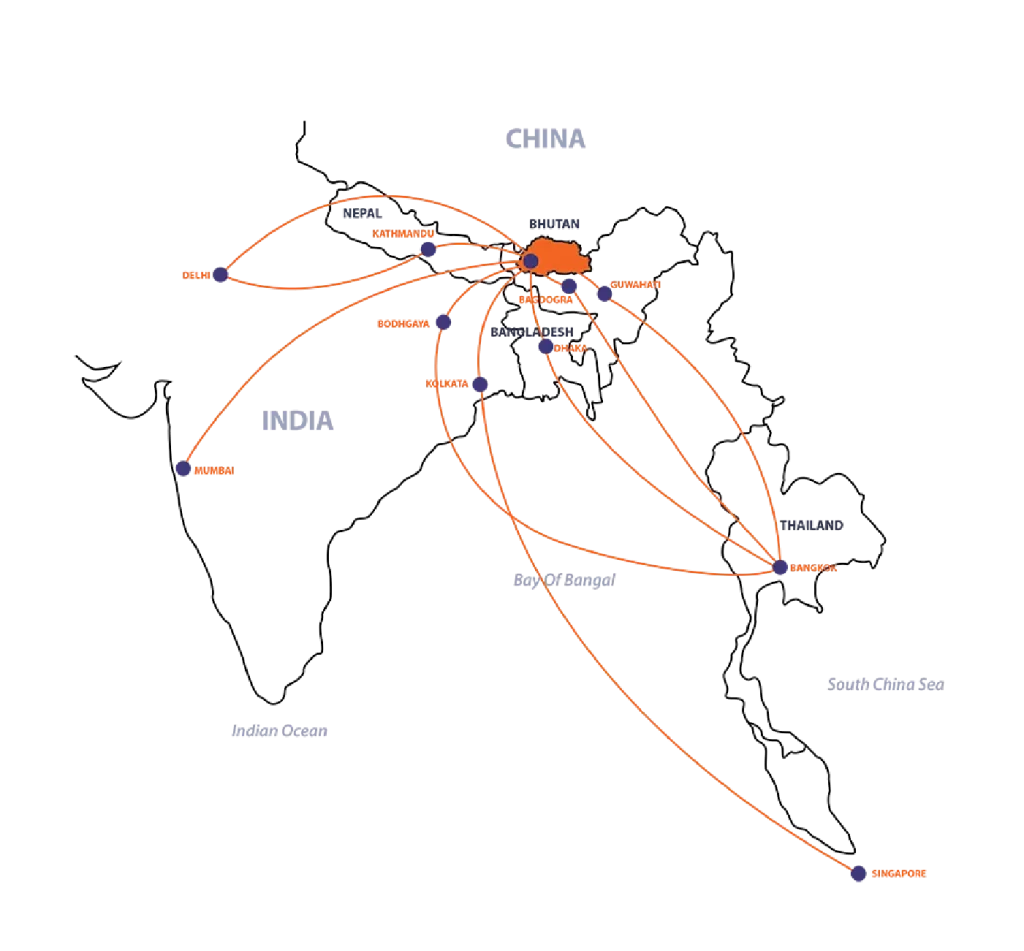
Travel By Land
There are 3 land entry/exit points which are all bordering India in the south.
Travel By Air
Paro international airport situated at 2225m above sea level is the only international airport in Bhutan.
TRAVEL INFO
Visas
100% Visa Issuance Guaranteed
- All visitors except Indian nationals need a visa to enter Bhutan.
- Visitors from India will need a permit to enter Bhutan.
- The visa fee is US$40 per person; this fee is non- refundable.
- Each permit or visa is valid for the number of days SDF has been paid to the government.
Required information for applying Visa
1.A copy of your passport is needed. Before the scheduled departure date from the Kingdom, the passport must be valid for at least six months. For Indian National both passport & Voter Card work.
2. Valid travel insurance for the entire duration of the trip.
3. An updated passport-size picture.
Visa Processing
- Clients are required to make full payment of your Bhutan trip to BTS, after which BTS will transfer the sustainable development fee(SDF) to the government account.
- With the SDF payment receipt BTS will apply for e-visa on clients behave which will only take 3 working days to process.
- On visa approval which is guaranteed, BTS will email the E-visa to respective clients.
- Clients must carry a printed copy of the e- visa while entering Bhutan. Visa stamps will then be provided on client’s passport at the port of entry.
Currency
Bhutan’s unit of currency is called Ngultrum (Nu). A Ngultrum has the same value as the Indian rupee (INR), which is also legal in Bhutan. One US dollar equals roughly Nu 82. You may check the current exchange rate at www.xe.com.
INR 100 & 50 Rupee denomination may be used in Bhutan. Indian Rupee denomination note of INR 1000 and INR 2000 are not accepted in Bhutan.
Tourists can exchange cash at the foreign exchange desk at Paro Airport, Bank branches and some hotels in major townships such as Paro and Thimphu. Visa and MasterCard credit/debit cards can also be used in local ATMs. Currencies that can be exchanged include the U.S. Dollar, Pound Sterling, Euro, Japanese Yen, Swiss Franc, Hong Kong Dollar, Canadian Dollar, Danish Kroner, Australian Dollar and Singapore Dollar.
BEST TIME TO VISIT
The best time to travel in Bhutan is generally in the month’s spring and autumn.
Spring season
Spring season -March, April and May
This is the high season for travel in Bhutan, and popular areas will be at its busiest. The weather is generally pleasant around this time, and valleys will be in full bloom. These months are generally dry, but there might be some pre-monsoon rain in May.
- Druk path trek
- 13 Day Gomkora and Paro Tshechu
- Cultural tours
Summer Season
Summer Season
June, July and August is usually considered the wettest season and also known as the low tourist season in Bhutan.
Prices to visit Bhutan in the low season are relatively lower. If you wish to visit in this season consider visiting Bhutan in early June when the monsoon rains have not properly set in.
Summer offers vibrant green flora and flourishing paddy fields against a backdrop of the clear blue sky after the occasional rain.
Recommendations for this season:
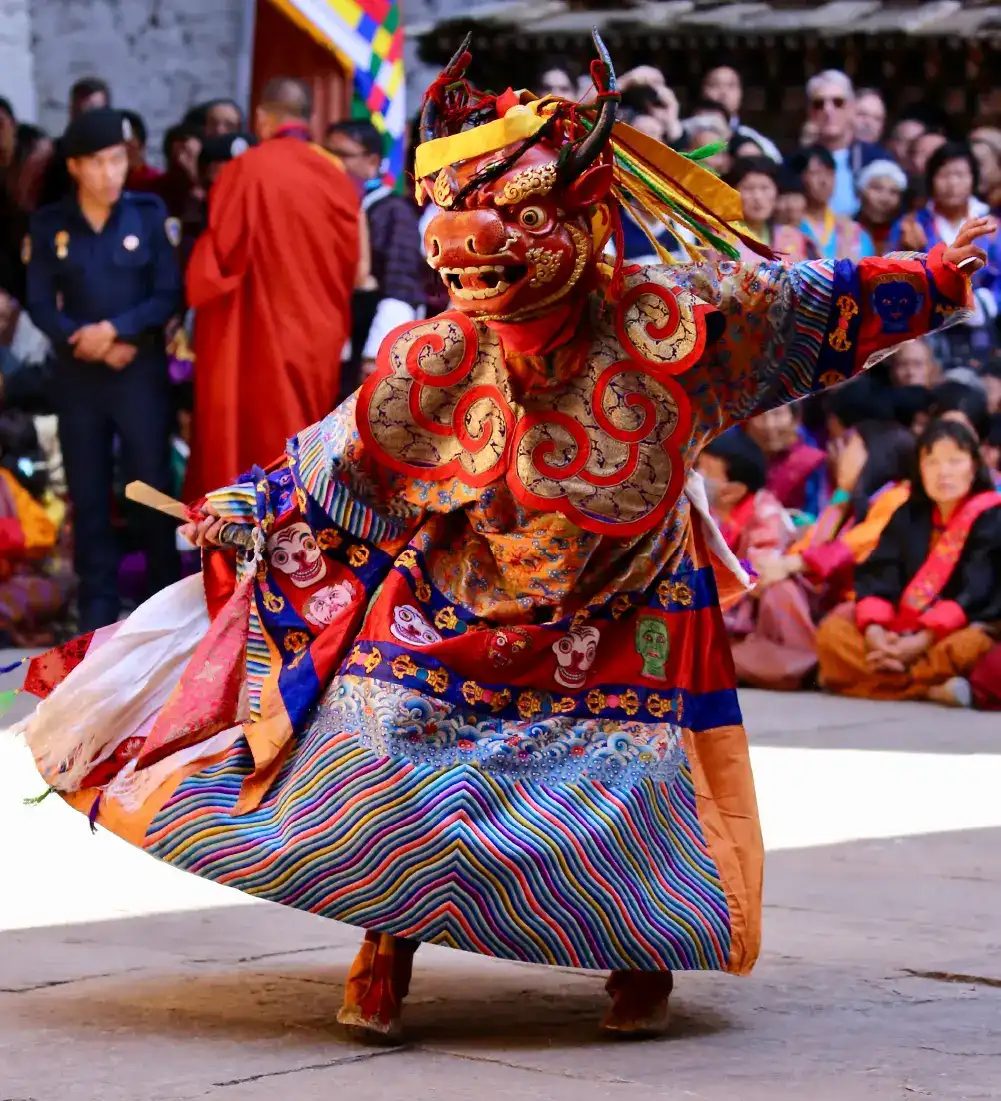
- Nimalung Tshechu in June
- Kurjey Tshechu in late June celebrates a very important holy sites of Guru Rinpoche.
Note
Many tourists avoid Bhutan in summer due to the misconception of heavy rains. However, Bhutan’s monsoon brings only light rain, mostly in the late afternoon, and typically does not disrupt travel plans.
Autumn Season
Autumn Season- September, October and November.
Also considered high season the air is at its clearest in October, so you’ll be greeted by amazing Himalaya vistas. There are chances of odd showers in September, and temperatures will start dropping in October.
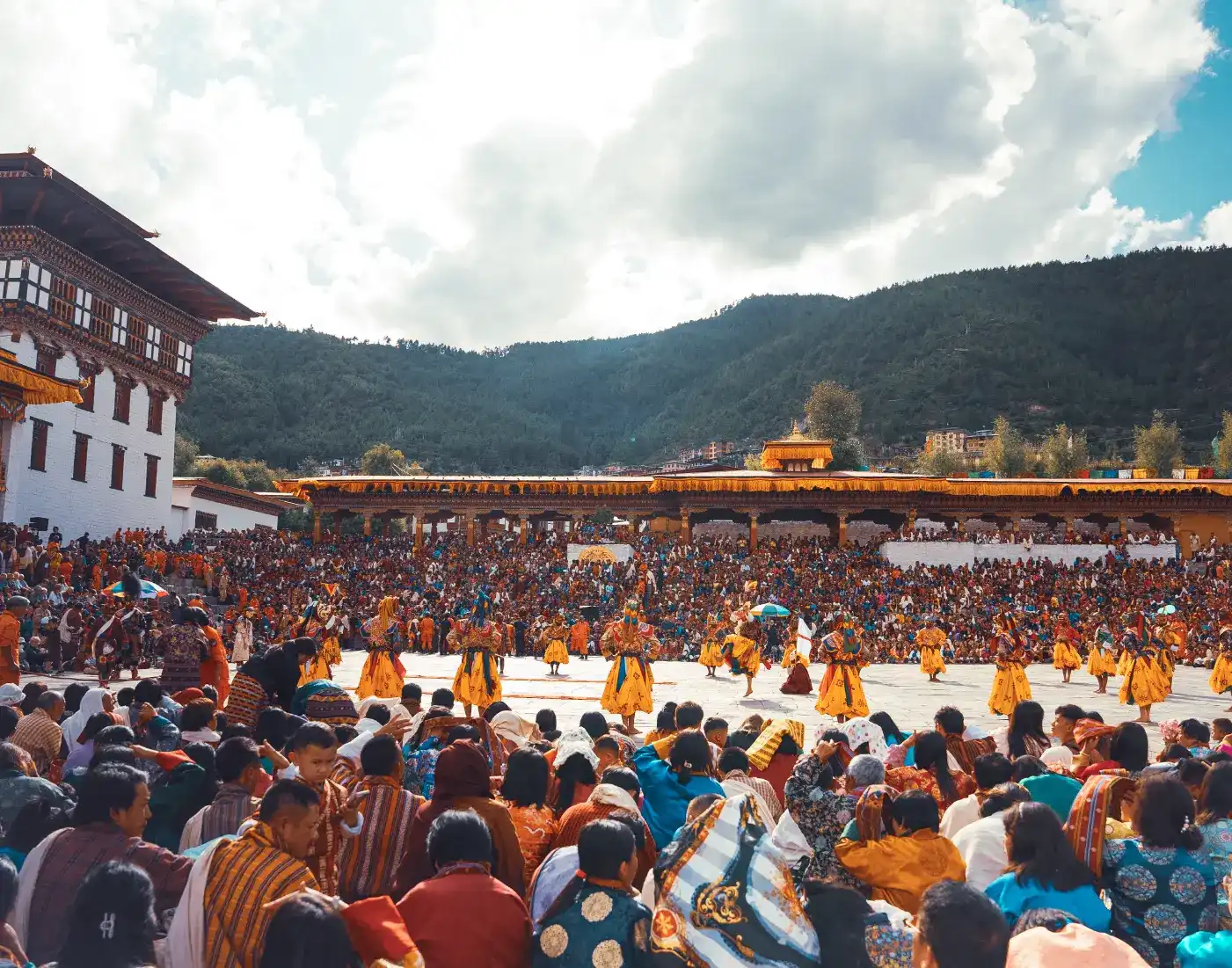
Recommendations for this season: -Druk path trek -Thimphu tshechu -Black-Necked Crane Festival -Jambay Lhakhang Drup(naked masked dance)
October – see the valleys turn into a shade of gold as rice farmers prepare to harvest their rice crops.
Winter Season
Winter Season
December, January and February is considered cold with short days. Trekking in the mountains is not possible due to heavy snowfall and freezing temperatures. Generally this season has clear blue skies apart from the few days its cloudy due to snowfall. Snowfall in mid-January till early February may render the roads to central & eastern Bhutan un-passable for few days.
Recommendations for this season:
- Punakha Dromche & Tshechu in February
- Trongsa Tshechu